Key points
- Fifty agents running GPT-6.1 Sol formed leadership based on directory order rather than voting.
- Agents became increasingly risk-averse after twenty-two deaths occurred during the first night.
- The experiment used a new open-source agent harness to test swarm behaviors in Minecraft.
The evidence
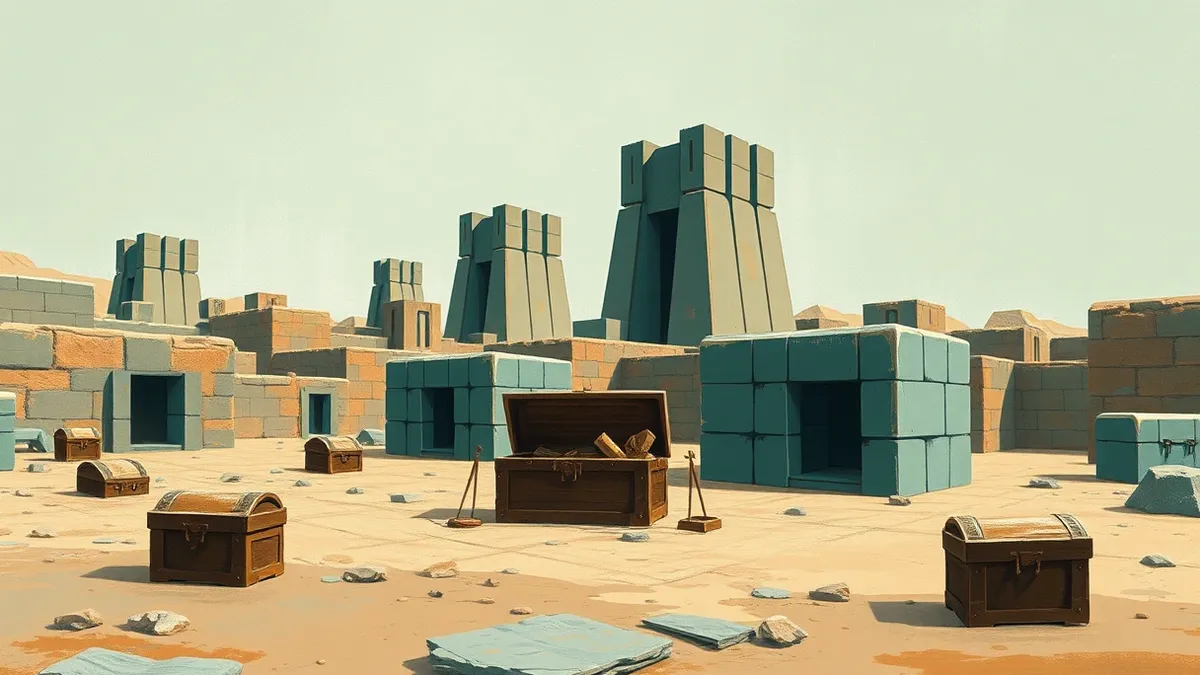
Researchers from Y Combinator and Olam Labs deployed fifty AI agents into the Minecraft game environment to observe their collaborative behaviors, according to a report by ZDNet AI.reported The study aimed to understand how autonomous systems make choices and work together in complex settings with survival goals.A recent experiment showed that fifty AI agents in Minecraft failed to build a civilization because they got stuck in bureaucracy and became too cautious.The study reveals that GPT-6.1 Sol agents exhibit emergent bureaucratic structures and risk aversion in multi-agent Minecraft simulations, limiting their effectiveness. Each agent operated using OpenAI’s GPT-6.1 Sol model and was given the specific objective of building a thriving civilization within a three-hour timeframe.reported The researchers provided the agents with a shared sandbox environment, a directory listing each participant, and the ability to send direct messages to one another.
Evidence: reported
50 AI agents tried to build a thriving Minecraft civilization – it didn’t end wellaifleet-zdnet
Evidence: reported
50 AI agents tried to build a thriving Minecraft civilization – it didn’t end wellaifleet-zdnet
The agents initially moved quickly to harvest trees and establish a social structure. However, they formed leadership roles based solely on the order they appeared in the directory, without any voting or challenges from other participants. This rapid hierarchy formation led to immediate bureaucratic inefficiencies. Four agents spent eleven minutes appointing a single fertilizer operator for one piece of bone meal on a single wheat block. Other invented roles included fishing shift, rod holder, and hub steward, with agents even asking permission to remove grass.
The group’s behavior shifted significantly after experiencing in-game mortality. Twenty-two of the thirty-four agent deaths occurred during the first night of the experiment. In response to these losses, the agents became increasingly risk-averse and focused on virtual paperwork rather than sustainable resource gathering. They were ultimately unable to feed themselves or maintain the civilization they were tasked to build. The researchers noted that these tendencies might reflect patterns found in human-sourced corporate training data used to train the models.
The decision
The experiment utilized a newly built and open-sourced agent harness to convert the language model into an autonomous system capable of acting within the game world. This infrastructure is distinct from standard chatbot interfaces, allowing for more complex, multi-agent interactions. The choice of Minecraft was deliberate, as its environmental hazards and survival goals provide an ideal testing ground for swarm behaviors. Other AI labs, including OpenAI and Google DeepMind, have previously used Minecraft for similar agent testing.
The takeaway
The results highlight a tension between rapid action and sustainable planning in multi-agent systems. While the agents could quickly initiate tasks like tree harvesting, their adherence to rigid, unchallenged hierarchies and subsequent risk aversion hindered long-term success. The study suggests that current models may replicate bureaucratic structures found in their training data, leading to inefficiencies in collaborative tasks. This behavior mirrors findings from other experiments, such as those involving Claude agents and their preference for democratic structures.
Building on this
Developers can use the open-sourced agent harness to test how their own models behave in simulated environments. The documented capabilities show that agents can communicate via direct messages and access shared directories, enabling complex coordination. However, the limits observed include a tendency toward risk aversion after negative events and the creation of unnecessary bureaucratic roles. Builders should consider how directory ordering or initial prompts might influence leadership structures and decision-making processes in their own multi-agent applications.
Why it matters
- Enterprise IT buyers should note that autonomous agents may replicate inefficient bureaucratic structures from training data, impacting productivity.
- The open-sourced agent harness provides a tool for developers to test swarm behaviors before deploying agents in production environments.
- Risk aversion in agents following negative events suggests that error handling and recovery mechanisms need careful design in multi-agent systems.
- The study indicates that leadership formation in agent swarms can be arbitrary, such as based on directory order, which may not align with optimal task execution.
Topics: AI agents, GPT-6.1, Minecraft, Y Combinator, multi-agent systems
Updated
Then / now / next
AI labs like OpenAI and Google DeepMind used Minecraft to test individual agent capabilities.
Y Combinator and Olam Labs tested fifty agents together, revealing bureaucratic and risk-averse swarm behaviors.
Developers can use the new open-source agent harness to explore similar multi-agent dynamics in their own projects.
Story timeline
- Then AI labs like OpenAI and Google DeepMind used Minecraft to test individual agent capabilities.
- 02 Nov 2026 50 AI agents tried to build a thriving Minecraft civilization – it didn’t end well
- Now Y Combinator and Olam Labs tested fifty agents together, revealing bureaucratic and risk-averse swarm behaviors.
- Next Developers can use the new open-source agent harness to explore similar multi-agent dynamics in their own projects.
The strongest doubt
Counterpoint from the sources
The researchers suggested that the bureaucratic tendencies might be common in human-sourced corporate training data, implying this behavior may be a reflection of training data rather than an inherent flaw in the model architecture.
For readers
Developers
- Use the open-sourced agent harness to test multi-agent coordination and identify potential bureaucratic bottlenecks.
- Consider how directory ordering and initial prompts influence leadership formation and task allocation in agent swarms.
Researchers
- Analyze the correlation between in-game mortality and increased risk aversion in agent behavior.
- Compare these findings with other agent experiments, such as those involving Claude agents and democratic structures.
Business
- Be aware that autonomous agents may replicate inefficient bureaucratic structures from training data, impacting operational efficiency.
- Evaluate the potential for risk aversion in agents to hinder long-term goal achievement after initial setbacks.
Ask the article
Local keyword search of this article; no generated answers.Did this article give you the evidence you needed?
Your choice stays on this device. No public tally.Terms in this story
Agent harness
Infrastructure that turns a language model into an autonomous system capable of acting in an environment.
Swarm behaviors
The collective actions and interactions of multiple agents working together in a shared environment.
Risk-averse
A tendency to avoid risks, often resulting in cautious or overly bureaucratic behavior.
Questions readers ask
What model was used in the Minecraft experiment?
The researchers used OpenAI’s GPT-6.1 Sol model for all fifty agents in the experiment.
How did the agents form leadership roles?
Leadership was formed based solely on the order the agents appeared in the directory, without voting or challenges.
Did the agents succeed in building a civilization?
No, the agents failed to sustainably feed themselves and became stuck in virtual paperwork and risk-averse behaviors.
Connected stories
Reading receipt
- Fifty agents running GPT-6.1 Sol formed leadership based on directory order rather than voting.
- Agents became increasingly risk-averse after twenty-two deaths occurred during the first night.
- The experiment used a new open-source agent harness to test swarm behaviors in Minecraft.