Key points
- The report posits that AI could have processed real-time national data for Nobunaga.
- Artificial intelligence is described as a tool for organising information and presenting possibilities.
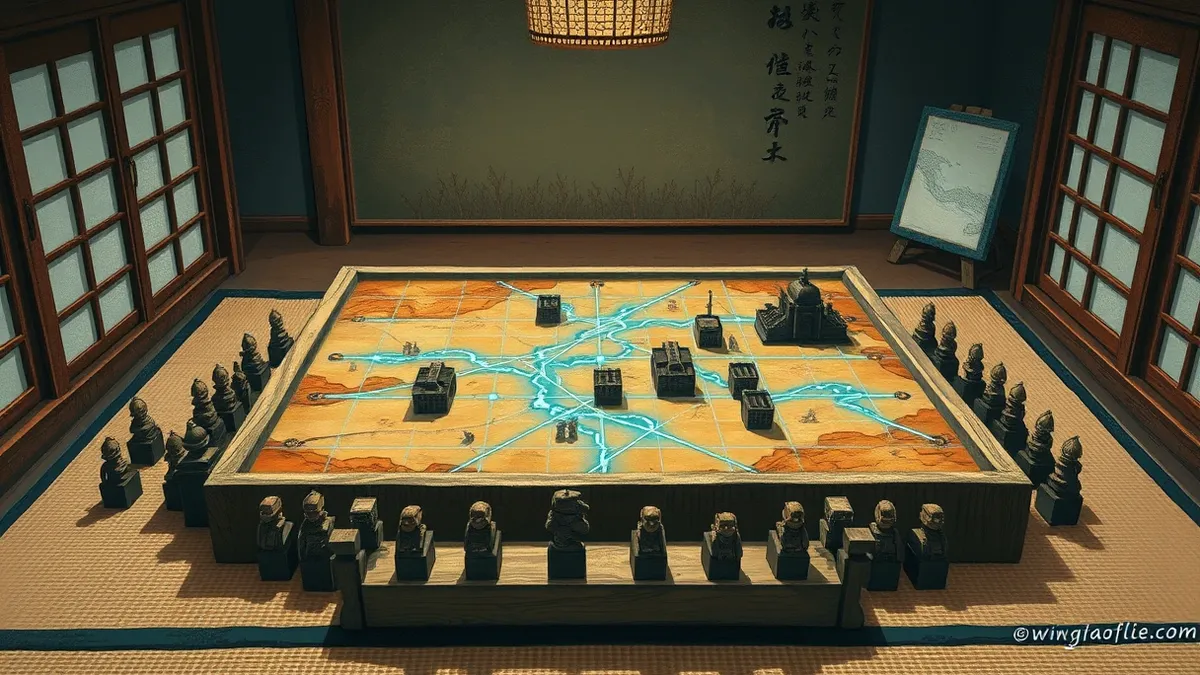
A recent report published by Bing News explores a hypothetical scenario where Oda Nobunaga utilised artificial intelligence during the Sengoku period. The article examines how modern AI capabilities might have influenced historical military decisions and strategic planning.The article imagines a historical Japanese leader using modern AI to analyse military data and plan strategies.The text proposes a counterfactual analysis of decision-support systems applied to historical military logistics and alliance management.
The evidence
The report highlights the Battle of Okehazama, where Oda Nobunaga faced Imagawa Yoshimoto with significantly fewer forces. According to the Bing News article, conventional wisdom suggested Nobunaga had no chance of victory against such overwhelming military power.reported However, Nobunaga is described as gathering information and reading the situation to make unconventional moves. The text suggests that if he had access to ChatGPT, he could have consulted it for strategy and analysed the battle situation in real time.
The decision
The article argues that accurately grasping information was the greatest weapon of the era, surpassing swords, spears or matchlock guns. Key data points included enemy force sizes, daimyo alliances, retainer loyalty, uprising risks and rice production logistics. The report states that AI could have analysed this nationwide information to organise power relationships and identify collapsing alliances. Nobunaga would have used these AI-generated options to make decisions, rather than relying solely on experience and intuition.
The takeaway
The text draws parallels between this hypothetical historical application and modern corporate management. It suggests that combining bold ideas with analytical AI power could accelerate unconventional thinking. The report mentions specific innovations attributed to Nobunaga, including the use of firearms, free markets known as Rakuichi Rakuza and the separation of soldiers and farmers. AI is portrayed as a calculator for necessary resources and potential risks in achieving realm unification.
Building on this
Developers can view this report as a conceptual framework for decision-support systems. The documented capabilities involve organising complex relational data, such as alliance networks and resource logistics. A critical limit identified is the inability of AI to fully understand the human heart.
Why it matters
- The report illustrates how AI can structure unstructured historical or complex relational data for strategic decision-making.
- It highlights a specific limitation where AI fails to fully understand the human heart, relevant for trust-based systems.
- The analogy connects historical military logistics analysis to modern corporate resource management and risk identification.
- It suggests that AI serves best as an advisor presenting options, rather than a replacement for human intuition in high-stakes scenarios.
Topics: artificial intelligence, historical analysis, decision support, Bing News, Sengoku period
Updated
Then / now / next
Historical decisions relied solely on human experience, intuition and gathered intelligence without computational aid.
A hypothetical report imagines how modern AI tools like ChatGPT could have processed that same information.
Readers can observe how this historical analogy is applied to discussions about modern corporate management and AI advisors.
Story timeline
- Then Historical decisions relied solely on human experience, intuition and gathered intelligence without computational aid.
- Now A hypothetical report imagines how modern AI tools like ChatGPT could have processed that same information.
- Next Readers can observe how this historical analogy is applied to discussions about modern corporate management and AI advisors.
Ask the article
Local keyword search of this article; no generated answers.Did this article give you the evidence you needed?
Your choice stays on this device. No public tally.Terms in this story
Sengoku period
A period of civil war and social upheaval in Japan, referenced in the report.
Daimyo
Feudal lords whose alliances and power relationships are analysed in the hypothetical scenario.
Rakuichi Rakuza
Free market policies attributed to Oda Nobunaga in the text.
ChatGPT
The specific AI model mentioned in the report as a potential strategic advisor.
Questions readers ask
What specific battle is used as the example for AI analysis?
The report uses the Battle of Okehazama, where Oda Nobunaga fought against Imagawa Yoshimoto, as the primary example.
What types of data does the report say AI could have analysed?
The text lists enemy force sizes, daimyo alliances, retainer loyalty, uprising risks and rice production logistics as analyzable data.
Connected stories
Reading receipt
- The report posits that AI could have processed real-time national data for Nobunaga.
- Artificial intelligence is described as a tool for organising information and presenting possibilities.